Why Healthcare Needs Automation Now
Clinics and healthcare institutions are under unprecedented pressure. Patient volumes are rising, administrative workloads are consuming a substantial share of clinical staff time, and patient expectations have shifted permanently toward instant, digital-first interactions. Meanwhile, patients frequently choose the provider that responds first.
AI automation is no longer a futuristic concept — it is the operational layer that allows modern clinics to scale care without scaling overhead.

What AI Automation Actually Does in a Clinic
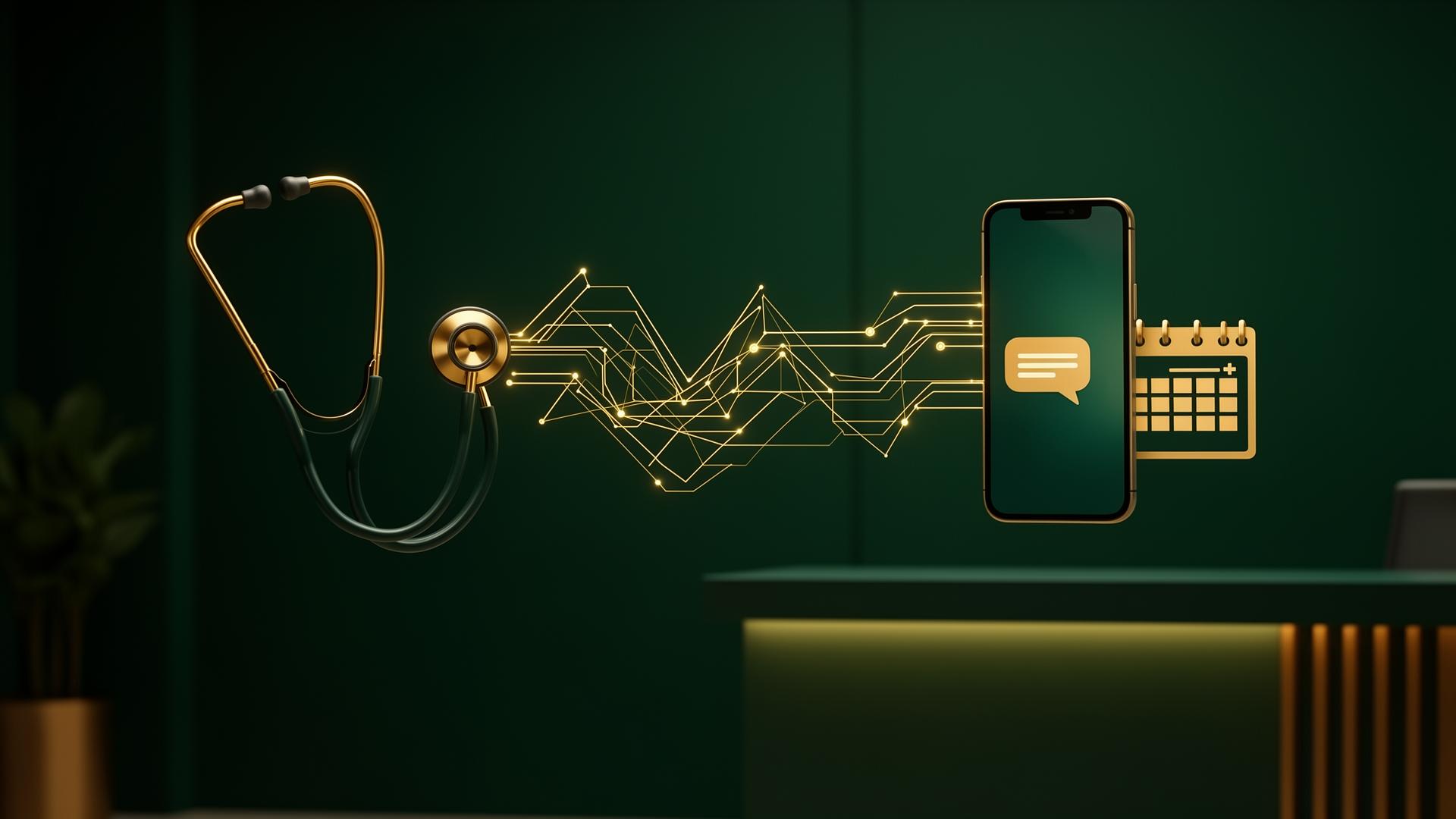
AI automation combines large language models, workflow engines, and channel integrations (WhatsApp, web chat, email, EHR systems) into a single coordinated layer that handles the repetitive, time-sensitive work that drains clinical and administrative staff.
In a real clinic deployment, AI automation typically handles:
- Patient inquiry response — instant replies on WhatsApp, web chat, Instagram, and Facebook, 24/7
- Lead qualification — gathering symptoms, treatment needs, budget, and travel details before a human gets involved
- Appointment booking — checking calendar availability and confirming slots without back-and-forth
- Reminders & follow-ups — pre-visit instructions, no-show reduction, post-treatment check-ins
- Document generation — personalized treatment plans, price proposals, and PDF quotes
- Multi-language patient support — fluent communication in 50+ languages for medical tourism
- EHR & CRM updates — keeping patient records synchronized without manual data entry
The Numbers: What AI Automation Delivers
Independent studies and real deployments across clinics in the GCC, Turkey, and Europe show consistent, measurable outcomes:
- Shorter response times and more consistent follow-up across enquiry channels
- Improved operational efficiency in patient acquisition through automated qualification and follow-up
- Support for appointment reminders and structured follow-up to reduce missed appointments
- 24/7 availability with response times under 2 seconds
- 15+ hours saved per week per administrative staff member
- 50+ languages supported simultaneously without hiring multilingual staff
Real Use Cases Across Clinic Types
Dental & Cosmetic Clinics
A dental clinic in Istanbul handling a high daily volume of enquiries restructured its intake process. The AI agent qualifies each patient (procedure type, urgency, insurance, travel plans) and books consultations directly into the doctor's calendar. Result: more consistent qualification and a more reliable booking process. Outcomes depend on scope, data quality, integrations, adoption and operating conditions.
Medical Tourism Providers
For hair transplant, IVF, and bariatric surgery clinics serving international patients, AI agents handle inquiries in Arabic, English, Russian, and Turkish simultaneously. They send personalized PDF treatment proposals, coordinate visa documentation, and manage the full pre-arrival journey — without a single human touchpoint until the patient is qualified.
General Practice & Multi-Specialty Centers
AI automation routes patients to the right specialist based on their described symptoms, books the appointment, sends pre-visit instructions, and follows up post-visit for review collection. Administrative staff move from reactive message handling to proactive patient experience work.
Hospitals & Healthcare Networks
For larger institutions, AI automation integrates with HIS/EHR systems (Epic, Cerner, custom platforms) to update patient records, trigger billing workflows, and feed analytics dashboards in real time.
Why It Works: The Speed-to-Lead Effect
A primary driver of AI automation value in healthcare is response speed. Qualification generally becomes harder as response delays increase. In healthcare, where patients often reach out to multiple providers simultaneously, the first clinic to respond — meaningfully, not just with an auto-reply — wins the patient.
AI agents respond in under 2 seconds, in the patient's language, with context-aware answers that move the conversation forward toward a booking.
What About Compliance and Trust?
Modern AI automation platforms for healthcare are built with HIPAA, GDPR, and KVKK compliance in mind. Patient data stays encrypted, conversations are logged for audit, and sensitive medical decisions always remain with licensed practitioners. AI handles communication, scheduling, and qualification — not diagnosis.
At ALTINKEY, every AI agent we deploy for healthcare clients follows a strict code-first architecture with full data residency control, end-to-end encryption, and human-in-the-loop escalation paths.
The Bottom Line
AI automation in healthcare is no longer about replacing people — it is about giving your team back the hours they currently lose to repetitive messaging, manual scheduling, and inquiry triage. Clinics that adopt it now are seeing dramatic gains in conversion, retention, and patient satisfaction. Those that wait will compete against providers who answer in seconds, in any language, at any hour.
The technology is available today. The remaining question is how soon your clinic starts, and with which processes.