If you have ever tried to connect a large language model to your CRM, your database, your calendar, and your internal documents at the same time, you already know the pain: every integration is custom, every API is different, and every new tool means more glue code, more secrets to manage, and more things that break in production.
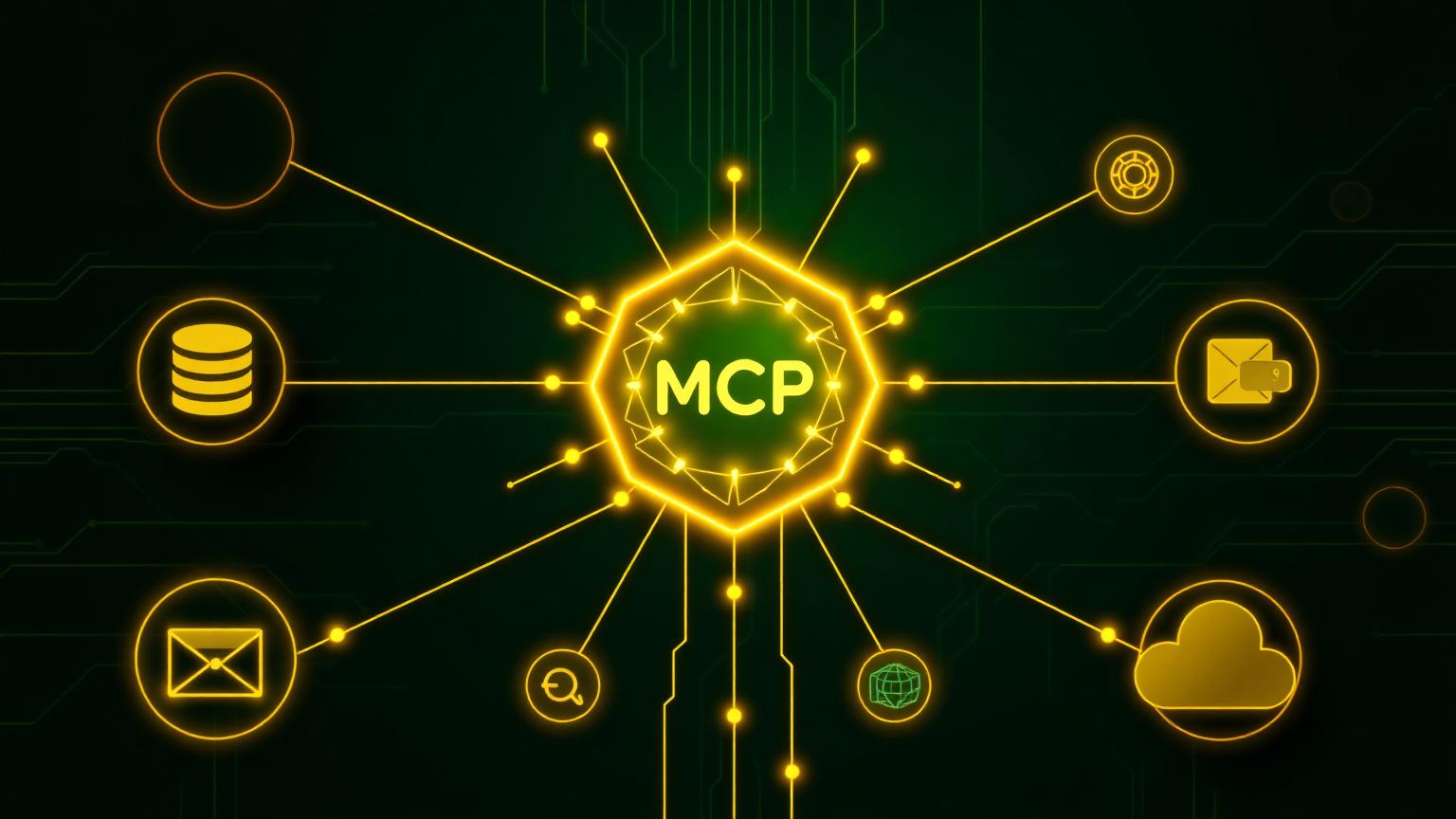
Model Context Protocol (MCP) is the open standard that fixes this. It is quickly becoming the *USB-C of AI* — one universal way for AI agents to talk to any external tool, data source, or service.
What Is MCP in Agentic AI?
MCP (Model Context Protocol) is an open protocol, originally introduced by Anthropic in late 2024 and now adopted across the industry, that defines a standard way for AI applications to connect to external systems. In agentic AI, where models do not just chat but actually *take actions* — booking appointments, querying databases, sending messages, updating records — MCP is the layer that lets one agent securely access many tools without bespoke integration code for each one.
In plain language: MCP is to AI agents what HTTP is to the web. It is the shared language that lets any AI client talk to any tool server, as long as both speak the protocol.
Why Agentic AI Needed a Standard
Before MCP, every team building an AI agent had to solve the same problem from scratch:
- Wrap each external API (Gmail, HubSpot, Notion, Postgres, Google Drive…) in a custom tool definition
- Manage authentication, rate limits, and error handling for each one separately
- Re-implement the same connectors for every new model or framework (OpenAI, Anthropic, Gemini, open-source)
- Update everything again whenever an API changed
The result was fragile, expensive, and impossible to scale. An agent that worked with Slack often could not work with Microsoft Teams without weeks of extra engineering.

MCP collapses all of that into a single contract. A tool only needs to be exposed once as an MCP server, and *any* MCP-compatible AI agent can use it immediately.
How MCP Actually Works
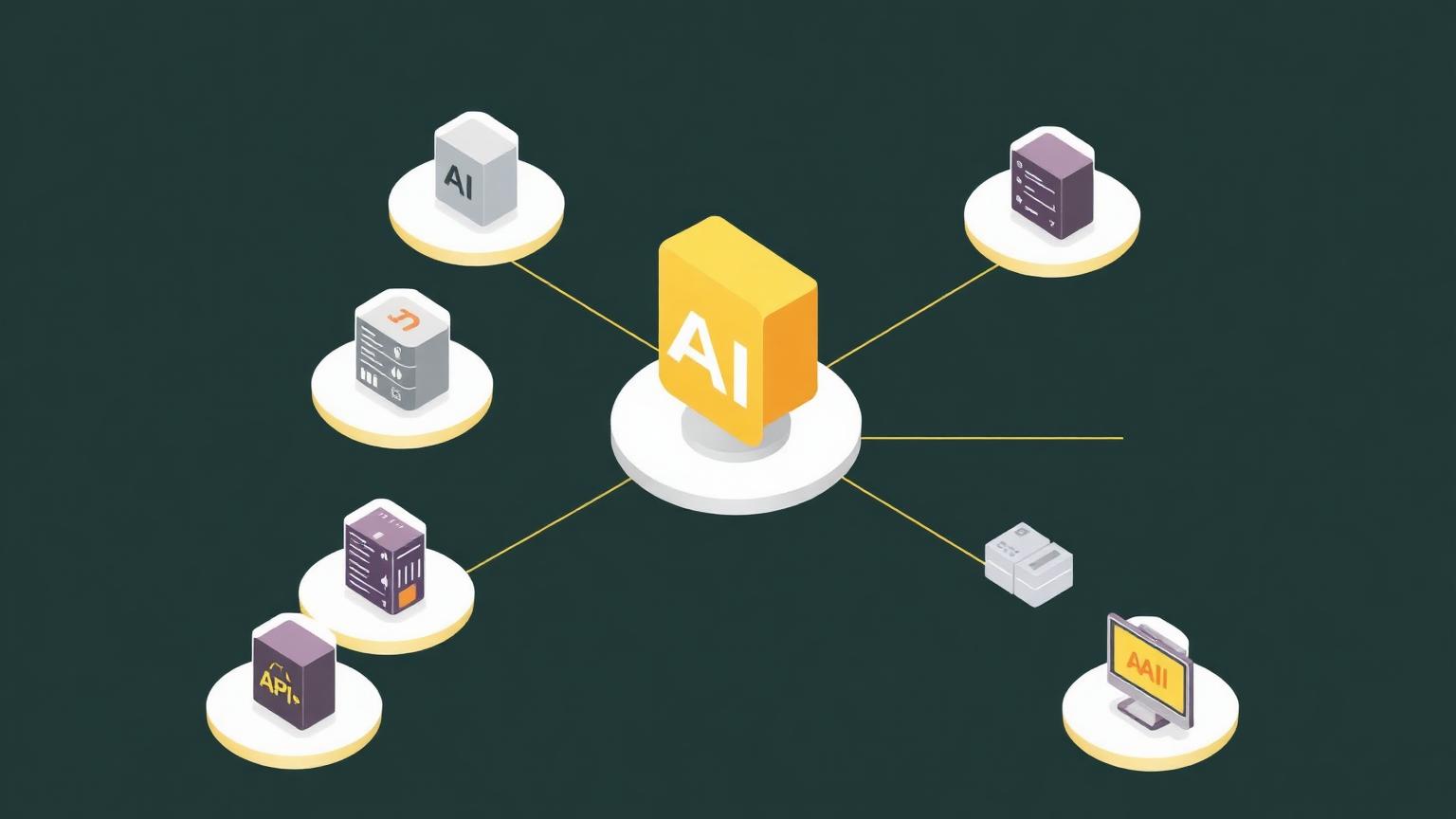
MCP follows a simple client-server architecture:
- MCP Host — the AI application the user interacts with (Claude Desktop, Cursor, an enterprise agent, a custom assistant).
- MCP Client — the component inside the host that maintains a connection to one MCP server.
- MCP Server — a lightweight program that exposes a specific capability: access to a database, a CRM, a file system, an internal API, etc.
The AI model running inside the host can then discover, call, and combine the capabilities offered by every connected server, automatically.
The Three Things an MCP Server Exposes
- Tools — functions the AI can call (e.g. `create_invoice`, `search_patients`, `send_whatsapp_message`).
- Resources — read-only data the AI can pull into context (documents, database rows, files).
- Prompts — reusable, parameterized prompt templates the host can offer to users.
Everything is described in a machine-readable schema, so the AI knows exactly what each tool does, what inputs it needs, and what it returns — without a human having to hand-write the instructions.
Why MCP Is a Game-Changer for Businesses
For companies deploying AI agents in real operations — sales, support, healthcare, real estate, e-commerce — MCP is not just a technical upgrade. It is what finally makes agentic AI practical at scale.
| Without MCP | With MCP |
|---|---|
| Custom code for every tool integration | One standard interface, reusable everywhere |
| Locked into a single AI vendor | Switch models freely — tools keep working |
| Weeks of work to add a new system | Minutes to plug in an existing MCP server |
| Hard-coded credentials in many places | Centralized, auditable access control |
| Fragile workflows that break on API changes | Stable contracts, versioned and maintained |
Concrete Business Wins
- Faster deployment — connect an AI agent to a CRM, ERP, or booking system in hours instead of weeks.
- Lower cost — stop re-building the same integrations for each project or model.
- Future-proof — when a better model comes out, your tools still work. When a better tool comes out, your model still works.
- Better security — one place to manage permissions, scopes, and audit logs.
- Real composability — let one agent combine WhatsApp, Google Calendar, your CRM, and your internal database in a single workflow without custom orchestration.
Real Examples of MCP in Action
- A healthcare clinic uses an MCP server for its patient management system. An AI sales agent on WhatsApp instantly checks availability, books appointments, and updates patient records — without any custom integration.
- A real estate agency exposes its property database via MCP. The same AI agent can search listings, generate price comparisons, and send tailored brochures across web chat, Instagram, and WhatsApp.
- An e-commerce brand connects Shopify, its email platform, and its analytics database through MCP. The agent can answer customer questions, process refunds, and recommend products with full context.
- An internal operations team uses MCP to give the same AI agent secure access to Notion, Google Drive, Postgres, and Jira — so it can draft reports, query data, and update tickets in one conversation.
MCP vs Traditional API Integrations
A common question: *we already have APIs — why do we need MCP?*
APIs are for software-to-software communication. MCP is purpose-built for model-to-software communication. It standardizes the things AI agents specifically need:
- Self-describing tool schemas the model can reason about
- A consistent way to discover available capabilities at runtime
- Structured responses optimized for LLM context windows
- Built-in primitives for resources, prompts, and tool calls
- Transport-agnostic design (local stdio, HTTP, SSE) for both desktop and cloud agents
In short: REST APIs were designed for developers. MCP was designed for agents.
The Future: An Open Ecosystem of AI-Ready Tools
The MCP ecosystem is growing fast. Major AI platforms, IDE vendors, and SaaS companies are publishing official MCP servers, and an open marketplace of community servers already covers most popular tools — from GitHub and Linear to Google Workspace, Slack, Postgres, and Stripe.
The direction is clear: every serious business tool will soon ship with an MCP server, and every serious AI agent will speak MCP natively. Companies that adopt this standard early get an agent stack that is portable, composable, and ready for whatever comes next.
Want an AI Sales Agent That Talks to All Your Tools?
Our AI Sales Agent Layla connects to your CRM, WhatsApp, calendar, and databases through modern protocols like MCP — qualifying leads, booking meetings, and closing deals 24/7 in 50+ languages.
Chat with Layla on WhatsAppKey Takeaways
- MCP (Model Context Protocol) is an open standard that lets AI agents connect to any tool, data source, or service through a single, consistent interface.
- In agentic AI, MCP is what turns isolated chatbots into operational agents that can actually *do work* across your stack.
- It replaces dozens of fragile custom integrations with one reusable contract — drastically cutting cost, time-to-deploy, and vendor lock-in.
- Businesses adopting MCP today are building AI systems that are portable, composable, and future-proof.
Ready to Deploy an Agentic AI System in Your Business?
ALTINKEY has been building production AI automation systems since 2018, helping clinics, real estate agencies, e-commerce brands, and service businesses across the GCC, Turkey, and Europe deploy AI agents that connect to their real tools, real data, and real customers — using modern standards like MCP.
If you want to explore how an agentic AI system could work in your business, talk to an AI transformation expert with our team, or message us directly on WhatsApp and we will map out a tailored plan for you.