Understanding the Landscape: Chatbot vs AI Sales Agent
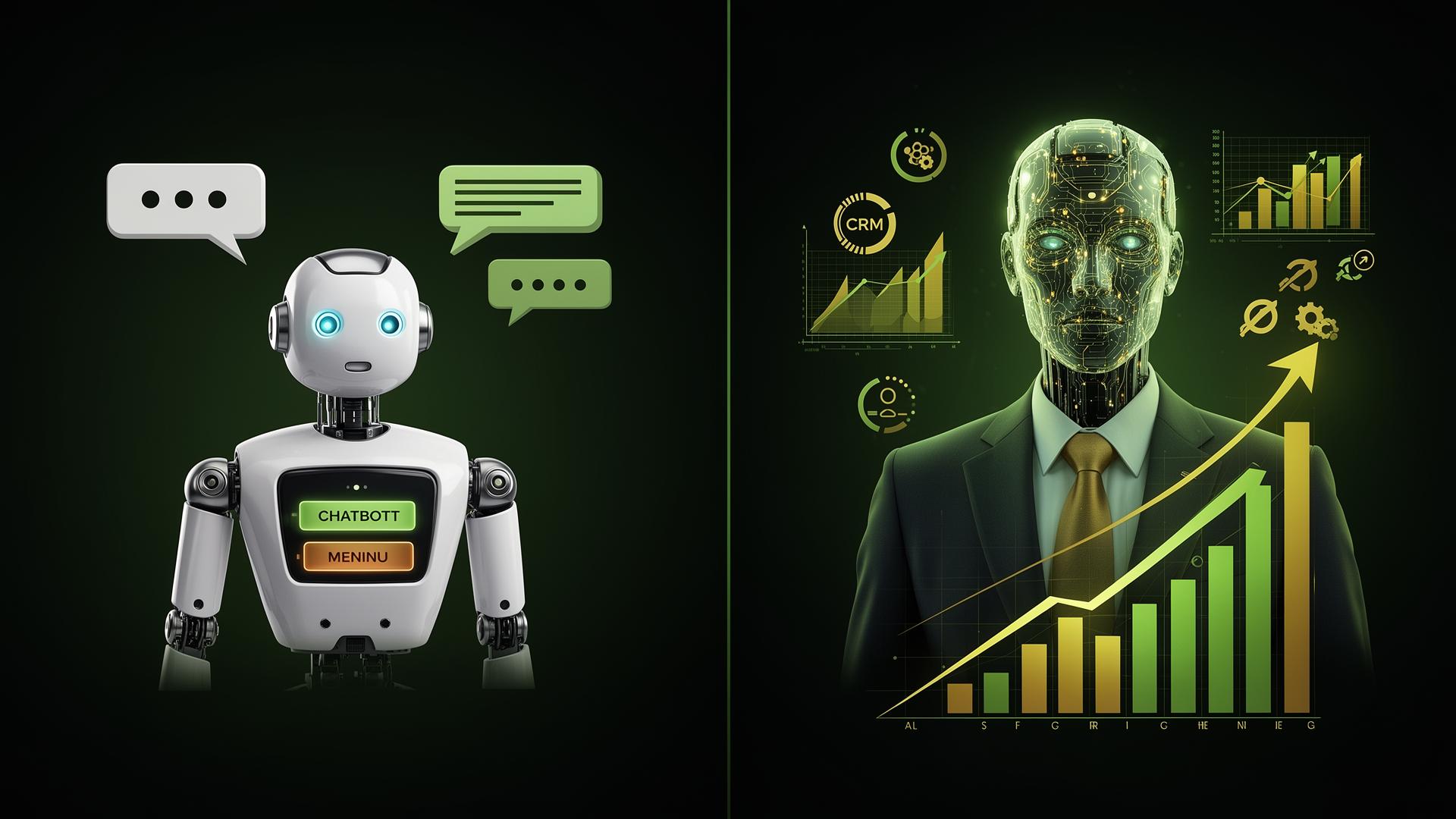
In 2026, businesses across industries are investing heavily in conversational AI. But a critical distinction exists between two technologies that are often confused: chatbots and AI sales agents. While both interact with customers through conversation, their capabilities, intelligence levels, and impact on revenue are fundamentally different.
Understanding this difference is not just a technical exercise — it's a strategic business decision that directly affects your bottom line.
What Is a Chatbot?
A chatbot is a software application designed to simulate conversation with users, typically through text-based interfaces on websites, messaging apps, or social media platforms.
Key characteristics of chatbots:
- Rule-based logic: Most chatbots operate on predefined decision trees and scripted responses
- Keyword matching: They identify keywords in user input and return pre-programmed answers
- Limited scope: Chatbots handle FAQs, basic navigation, and simple support tickets
- No learning capability: Traditional chatbots do not improve over time without manual updates
- Single-channel focus: They typically operate on one platform at a time
Chatbots are effective for deflecting repetitive queries and reducing the load on human support teams. However, they lack the intelligence to qualify leads, understand buying intent, or drive conversions.
What Is an AI Sales Agent?
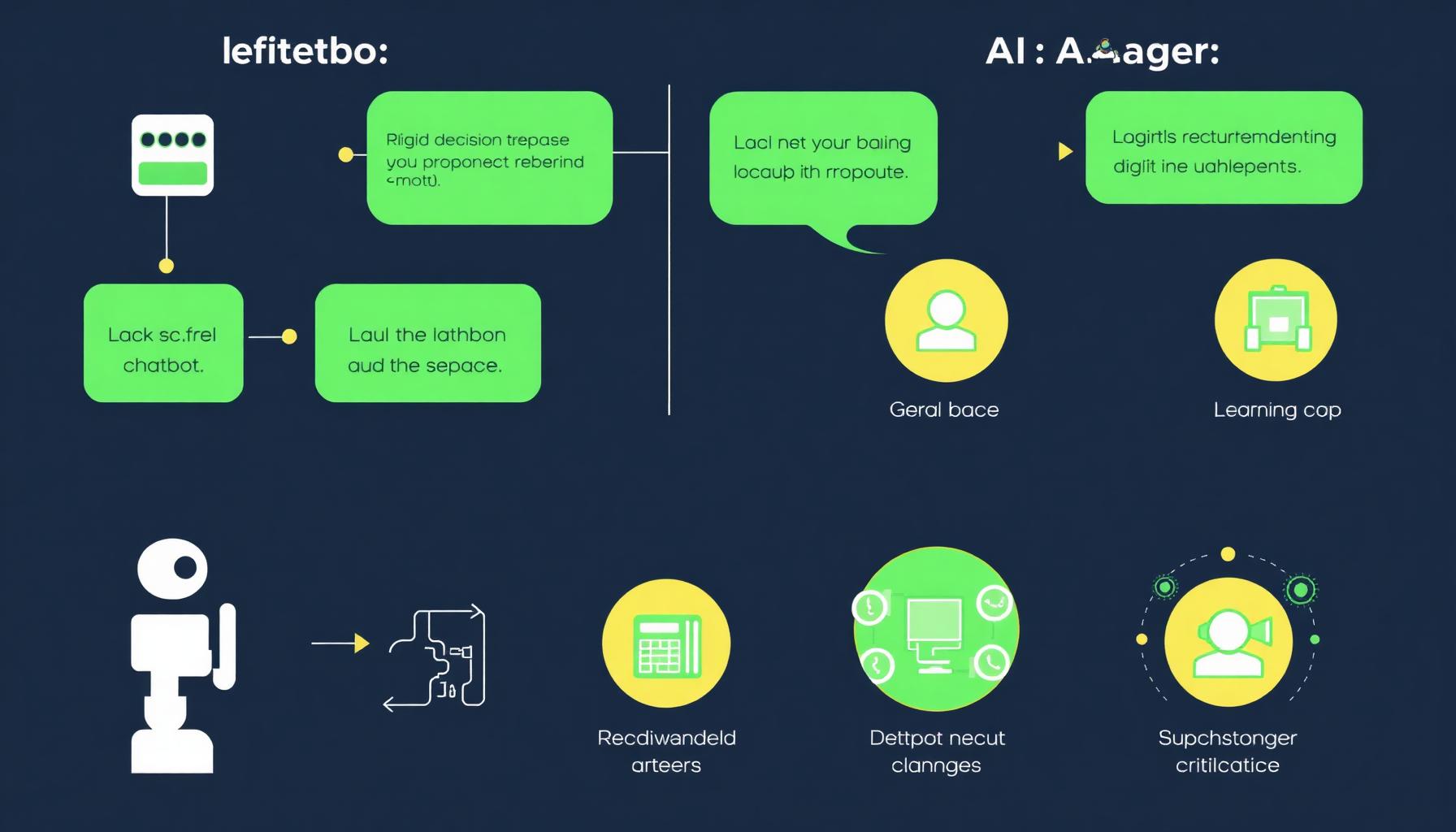
An AI sales agent is an autonomous, intelligent system that goes far beyond basic conversation. It is designed to actively sell — qualifying leads, understanding customer needs, recommending products, handling objections, and closing deals.
Key characteristics of AI sales agents:
- Natural Language Understanding (NLU): They comprehend context, sentiment, and intent — not just keywords
- Autonomous decision-making: AI sales agents can make real-time decisions about how to guide a conversation toward conversion
- CRM integration: They connect with your sales pipeline, updating lead status, scheduling follow-ups, and syncing data automatically
- Multi-channel operation: They work simultaneously across WhatsApp, email, web chat, social media, and voice
- Continuous learning: They improve with every interaction, optimizing their approach based on conversion data
- Personalization at scale: Each prospect receives a tailored experience based on their behavior, preferences, and stage in the buying journey

Head-to-Head Comparison: Chatbot vs AI Sales Agent
| Feature | Chatbot | AI Sales Agent |
|---|---|---|
| Intelligence | Rule-based, scripted | AI-powered, contextual |
| Lead Qualification | None | Automated scoring and routing |
| Personalization | Generic responses | Tailored to each prospect |
| Sales Capability | Passive information delivery | Active selling and closing |
| CRM Integration | Limited or none | Deep, real-time sync |
| Multi-Channel | Usually single channel | Omnichannel by design |
| Learning | Static without manual updates | Self-improving over time |
| ROI Impact | Cost reduction | Revenue generation |
| Objection Handling | Cannot handle | Trained to overcome objections |
| Follow-Up | None | Automated sequences |
When Should You Use a Chatbot?
Chatbots still have a valid place in your technology stack for specific use cases:
- FAQ automation: Answering common questions about hours, locations, or policies
- Basic support triage: Routing support tickets to the right department
- Simple lead capture: Collecting name and email before passing to a human agent
- Cost-sensitive operations: When budget constraints prevent AI investment
However, if your goal is to increase sales, improve conversion rates, or scale your sales operation, a chatbot will not deliver.
When Should You Use an AI Sales Agent?
An AI sales agent becomes essential when:
- You need 24/7 sales coverage without hiring additional staff
- Lead response time matters — AI agents respond in seconds, not hours
- You operate across multiple channels and need consistent engagement
- Your sales team is overwhelmed with unqualified leads
- You want to scale revenue without proportionally scaling headcount
- You need data-driven insights on customer behavior and sales performance
Ready to Replace Your Chatbot with an AI Sales Agent?
Discover how ALTINKEY's AI sales agents can automate your entire sales pipeline — from lead capture to closing — across WhatsApp, email, and web. Talk to an AI transformation expert.
Talk to Us on WhatsAppThe Real Cost of Staying with a Basic Chatbot
Many businesses underestimate the opportunity cost of relying on chatbots for sales-related interactions:
- Lost leads: Chatbots cannot identify high-intent prospects, letting them slip away
- Poor customer experience: Generic, scripted responses frustrate buyers who expect personalized engagement
- No revenue attribution: Without CRM integration and conversion tracking, you cannot measure chatbot ROI on sales
- Manual follow-up burden: Every lead captured by a chatbot still requires human follow-up, negating efficiency gains
In contrast, an AI sales agent operates as a full-cycle sales representative — one that never sleeps, never forgets a follow-up, and continuously optimizes its performance.
How AI Sales Agents Are Transforming Industries in 2026
Healthcare: AI sales agents qualify patients, book consultations, and follow up on treatment inquiries across WhatsApp and web — supporting appointment reminders and structured follow-up to reduce missed appointments.
Real Estate: Property inquiries are handled instantly with personalized unit recommendations, virtual tour scheduling, and automated broker matching.
E-Commerce: AI agents recover abandoned carts, upsell complementary products, and manage post-purchase engagement — supporting more consistent customer experiences and stronger conversion processes.
Professional Services: From law firms to consulting agencies, AI sales agents pre-qualify prospects, schedule discovery calls, and nurture leads through long sales cycles.
Glossary: Key Terms
- Chatbot: A software program that simulates text-based conversation using predefined rules or simple AI
- AI Sales Agent: An autonomous AI system designed to qualify leads, engage prospects, and drive sales conversions
- NLU (Natural Language Understanding): AI capability to comprehend meaning, context, and intent in human language
- Lead Scoring: Automated ranking of prospects based on their likelihood to convert
- Omnichannel: Operating consistently across multiple communication platforms simultaneously
- CRM (Customer Relationship Management): Software system for managing customer interactions and sales pipeline data
Conclusion: Chatbot or AI Sales Agent — Which Should You Choose?
The answer depends on your business objectives:
- If you need basic support automation, a chatbot is sufficient
- If you want to drive revenue, scale sales, and deliver personalized customer experiences, an AI sales agent is the clear choice
The businesses winning in 2026 are not just automating conversations — they are automating the entire sales journey with intelligent, autonomous AI agents.
Transform Your Sales with AI — Talk to ALTINKEY
Stop losing leads to basic chatbots. Our AI sales agents work 24/7 across all channels to qualify, engage, and convert your prospects. Contact us on WhatsApp for an automation assessment.
Talk to an AI Transformation Expert